
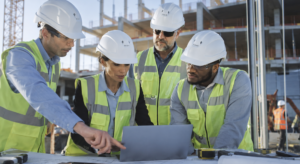
Technology has changed nearly every stage of modern construction, from early design and estimating to scheduling, field documentation, closeout, and long-term facility management. One role experiencing a particularly significant shift is the construction owner’s representative. Once centered primarily on meetings, site visits, budget reviews, and contractor coordination, the position is becoming increasingly dependent on information technology.
Cloud-based project management platforms, building information modeling, artificial intelligence, digital twins, mobile field applications, cybersecurity systems, and real-time analytics are giving owner representatives access to information that was difficult or impossible to obtain only a few years ago.
The result is not simply a more digital construction process. IT is changing how owners oversee risk, evaluate progress, control costs, communicate with project teams, and make critical decisions.
For organizations managing complex developments, working with an experienced Construction Owners Rep can provide an important layer of independent oversight between ownership, designers, contractors, consultants, vendors, and increasingly sophisticated technology systems.
Construction Oversight Is Entering a Digital Era 🏗️
Construction projects have always generated enormous amounts of information. Contracts, drawings, specifications, schedules, requests for information, change orders, invoices, photographs, inspection reports, meeting notes, submittals, and progress reports all contribute to the record of a project.
The difference today is that much of this information can be centralized, connected, searched, analyzed, and distributed almost instantly.
Industry technology coverage from Construction Dive shows how rapidly contractors and project teams are adopting AI, reality capture, connected data platforms, automation, robotics, and other digital tools. These technologies are increasingly influencing the way large construction projects are planned and delivered.
For the owner’s representative, this creates both an opportunity and a responsibility. Having more information does not automatically produce better project outcomes. Someone still has to determine which information matters, whether it is accurate, what it means for the owner, and when action should be taken.
That is where the modern owner’s rep is becoming as much an information manager as a construction manager.
Cloud Platforms Are Creating a Single Source of Project Information 💻
One of the most important changes has been the movement away from isolated spreadsheets, email chains, paper documents, and disconnected file systems.
Cloud-based construction management platforms can give authorized stakeholders access to current drawings, schedules, submittals, field reports, change documentation, photographs, and other project records from virtually anywhere.
Instead of waiting for information to move from the jobsite to the project office and eventually to ownership, representatives can often review developments as they occur.
Autodesk describes modern construction project management as increasingly dependent on connected data, automation, and AI-supported workflows that improve visibility and help teams identify project risks earlier. Autodesk construction technology resources reflect how deeply cloud technology is becoming integrated into project management.
For an owner’s rep, centralized systems can make it easier to compare current progress against the construction schedule, review open issues, verify documentation, monitor approvals, and identify items that could affect cost or completion dates.
The technology also creates a clearer project history. When decisions, drawings, approvals, and changes are documented within a connected system, disputes can be easier to investigate because the project team has a more complete digital record.
BIM Is Becoming an Owner Decision-Making Tool
Building information modeling has expanded far beyond the creation of sophisticated three-dimensional building models.
Wikipedia’s overview of Building Information Modeling describes BIM as a process involving digital representations of the physical and functional characteristics of buildings and other assets, with the information used to support decisions throughout the asset lifecycle.
That lifecycle perspective is especially important for owners.
A building model can help project teams coordinate architectural, structural, mechanical, electrical, plumbing, and other systems before certain conflicts appear in the field. For ownership, better coordination can mean fewer surprises that lead to redesign, schedule disruption, or expensive rework.
The owner’s representative can use BIM information to participate more effectively in design coordination, evaluate proposed modifications, understand spatial conflicts, and communicate complex issues to ownership in a more understandable format.
Instead of reviewing a problem only through drawings and written descriptions, stakeholders may be able to see how that problem affects the building digitally before construction proceeds.
Artificial Intelligence Is Accelerating Project Analysis
Artificial intelligence is beginning to influence planning, estimating, documentation, scheduling, safety, and project controls.
Microsoft’s discussion of AI in construction highlights applications such as analyzing project data, improving scheduling, identifying potential cost issues, assisting with documentation, and supporting jobsite safety.
For the owner’s representative, the biggest advantage may not be automation itself. It is the ability to recognize patterns faster.
Large projects can contain thousands of individual activities and an enormous volume of documentation. When digital systems can flag unusual cost movements, schedule changes, overdue items, design conflicts, or recurring issues, the owner’s rep can focus attention where it is most valuable.
AI can also help organize information that previously required extensive manual review.
Meeting records, change documentation, project correspondence, inspection records, schedule updates, and field observations can become more useful when technology helps identify relationships across those information sources.
Human judgment remains essential. Construction projects involve contractual obligations, relationships, physical conditions, design intent, safety considerations, financial consequences, and circumstances that cannot always be understood from data alone.
Technology helps the owner’s rep see more. Experience determines what to do with what is seen.
Real-Time Field Data Is Changing Risk Management
Jobsite information is becoming increasingly immediate.
Mobile applications allow field teams to upload photographs, document installations, record safety observations, track deficiencies, and report progress directly from the site. Drones, cameras, scanners, sensors, and reality-capture systems can provide additional visibility into work that is underway.
Engineering News-Record maintains extensive information technology coverage for the construction industry, including reporting on structured project data, digital processes, AI, and evolving construction technology.
For an owner’s representative, faster access to field information can shorten the distance between a developing problem and an ownership decision.
A schedule concern identified early may still have multiple solutions. The same concern discovered weeks later may already have affected labor sequencing, procurement, inspections, tenant commitments, or the completion date.
Real-time information does not eliminate construction risk. It can give the project team more time to respond to it.
Cybersecurity Has Become Part of Construction Governance 🔐
As construction becomes more connected, cybersecurity becomes a project concern rather than simply an issue for the corporate IT department.
Construction teams routinely exchange financial information, contracts, drawings, employee information, payment documentation, building-system data, access credentials, and other sensitive material through digital systems.
A compromised account or poorly protected platform can expose more than emails. It can potentially affect financial transactions, project documents, connected equipment, operational technology, and critical building information.
The NIST Cybersecurity Framework provides organizations with guidance for understanding and managing cybersecurity risk across businesses and industries. NIST emphasizes cybersecurity governance as well as identifying, protecting, detecting, responding to, and recovering from cyber risks.
The Cybersecurity and Infrastructure Security Agency also stresses practices such as system logging, monitoring, restricting unauthorized access, protecting records, and establishing responsibilities for responding to incidents.
Owner representatives do not need to become cybersecurity engineers. They do, however, increasingly need to understand how project information is stored, who has access to it, which systems are being used, and whether appropriate technology controls are part of project governance.
Digital Twins Are Extending Oversight Beyond Construction
The technology transformation does not necessarily end when the contractor leaves the site.
Digital twins are creating opportunities to connect design and construction information with ongoing building operations.
IBM’s explanation of digital twin technology describes a digital twin as a virtual representation of a physical object or system that can incorporate real-world data to reflect conditions and performance. Digital twins can be applied to structures, building systems, infrastructure, equipment, and other physical assets.
This creates a powerful connection between construction and facility management.
Information gathered during design and construction can potentially support maintenance planning, equipment monitoring, lifecycle management, renovations, and future capital improvements.
For owners, that makes data quality at project closeout increasingly valuable.
A box of manuals and disconnected electronic files has far less long-term value than accurate, organized information that can be integrated into operational systems.
The owner’s rep can play an important role in establishing expectations for digital turnover and ensuring that the owner receives useful information rather than simply a large volume of documents.
IT Is Strengthening Cost and Schedule Oversight
Cost and schedule control remain two of the most important responsibilities in construction oversight.
Technology is improving both.
Connected systems can help owner representatives compare budgets with commitments, review pending changes, track approvals, identify procurement risks, monitor schedule milestones, and recognize trends that could become larger financial problems.
Schedule management is also becoming more data-driven.
Digital scheduling systems can provide updated views of critical activities, dependencies, delays, and milestone movement. When those systems are connected with field information, ownership can gain a more realistic view of progress than it might receive from a static monthly report.
Current construction technology reporting reflects the growing emphasis on connected project data. Recent Engineering News-Record construction technology coverage includes AI, robotics, digital systems, sensors, data management, and other technologies that increasingly influence construction planning and execution.
The value for owners is not simply faster reporting. It is earlier decision-making.
A problem that reaches ownership after the cost has already been incurred provides limited options. A technology platform that helps the owner’s rep identify the same issue while alternatives are still available can provide significantly more value.
The Owner’s Rep Is Becoming the Bridge Between the Field and the Data
The construction owner’s representative has traditionally served as a bridge between ownership and the many companies responsible for designing and building a project.
IT adds another dimension to that role.
Modern representatives increasingly operate between physical construction activity and digital project information. They may review dashboards before visiting the jobsite, compare field conditions with BIM models, examine schedule data before a contractor meeting, review photographs remotely, and analyze cost information before recommending an ownership decision.
This does not reduce the importance of being physically present on a project.
In many ways, technology makes experienced field knowledge even more valuable because the representative has more information to interpret.
A dashboard can indicate that an activity is behind schedule. An experienced construction professional can investigate why it is behind schedule, determine whether the delay is recoverable, understand which trades will be affected, evaluate the contractor’s recovery plan, and explain the financial and operational consequences to the owner.
Technology delivers information. The owner’s rep provides context.
Technology Is Expanding the Value of Independent Oversight
As construction technology becomes more sophisticated, owners have access to more project data than ever before. That increased visibility can be extremely valuable, but only when information is organized, evaluated, and connected to meaningful decisions.
Cloud systems can improve collaboration. BIM can improve coordination. Artificial intelligence can accelerate analysis. Reality capture can strengthen documentation. Cybersecurity practices can protect sensitive project systems. Digital twins can extend information into the operational life of a building.
None of those tools independently protects the owner’s interests.
The owner’s representative remains responsible for understanding the project from the owner’s perspective and helping translate technical information into practical decisions involving budget, schedule, quality, risk, contracts, and long-term objectives.
Conclusion
IT is transforming the construction owner’s rep role by creating a faster, more connected, and increasingly data-driven approach to project oversight.
The modern owner’s representative is no longer working primarily from periodic reports, printed drawings, isolated spreadsheets, and information passed through multiple layers of a project team. Digital platforms can provide direct visibility into construction activity, financial changes, scheduling, documentation, design coordination, and emerging risks.
The most important transformation, however, is not the technology itself.
It is the ability to combine construction experience with better information.
Owners still need professionals who can evaluate competing interests, recognize risk, challenge assumptions, verify progress, protect budgets, monitor schedules, and keep the project aligned with the owner’s objectives. Technology is giving those professionals a much stronger set of tools.
As construction and information technology continue to converge, the most effective owner representatives will be those who understand both sides of the project: what is happening in the field and what the data is revealing behind it.