
Trees may look quiet, steady, and low-maintenance, but anyone who has dealt with storm damage, falling limbs, root problems, disease, or property hazards knows the truth. Trees can become expensive very quickly when small warning signs are missed. A crack in a branch, a fungal infection near the trunk, poor soil conditions, or hidden decay can turn from a minor concern into a major safety issue if it is not found early.
That is why the work of a modern tree expert is changing. Tree care is no longer only about climbing, trimming, removing, and inspecting with the naked eye. Today, information technology is helping professionals collect better data, track tree health over time, use mapping tools, analyze risk, document property conditions, and make smarter recommendations before a problem becomes costly.
For homeowners, property managers, municipalities, and commercial landowners, this shift is important. The right tree expert can now combine hands-on field experience with digital tools that make inspections more accurate and prevention more realistic. IT is giving tree care professionals the ability to see patterns, organize information, and identify warning signs earlier than ever before.
The New Connection Between Tree Care and IT
At first, tree care and information technology may seem like two completely different worlds. One involves soil, bark, roots, weather, pests, and outdoor labor. The other involves software, data, cloud storage, mobile devices, GPS, sensors, and digital reporting. But when those two worlds come together, tree care becomes more proactive.
A tree expert has always relied on knowledge, training, and experience. They understand how trees grow, how diseases spread, how roots affect structures, and how weather changes risk. IT does not replace that expertise. Instead, it strengthens it.
Modern technology allows tree experts to record inspection findings in the field, compare tree conditions over time, create digital inventories, photograph problem areas, generate reports, and monitor potential hazards. Similar to how broader technology coverage from sources like MIT Technology Review shows the growing role of data in everyday industries, tree care is becoming more informed by digital tools that support better decision-making.
When a professional can combine field observations with organized data, they are less likely to miss early warning signs. That can mean fewer emergency removals, fewer storm-related surprises, and better long-term tree health.
Digital Inspections Help Catch Problems Earlier
One of the biggest benefits of IT in tree care is the ability to document inspections more clearly. In the past, a tree expert may have taken handwritten notes, snapped a few photos, or given a verbal explanation to a property owner. While that may still be helpful, digital inspection tools allow for a much more complete record.
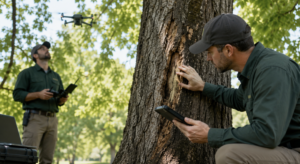
Using tablets or mobile apps, a tree expert can record the tree species, size, location, visible defects, canopy condition, root zone issues, pest activity, fungal growth, soil concerns, and nearby property risks. Photos can be attached directly to the inspection record. GPS locations can be marked. Follow-up dates can be scheduled. Recommendations can be saved and shared.
This matters because tree problems are often gradual. A small cavity may become larger. A branch crack may spread. A pest issue may move from one tree to another. A digital inspection record gives the tree expert and property owner something to compare against later.
Instead of guessing whether a problem has gotten worse, the expert can review previous records and see what has changed. That makes it easier to act before a repair, removal, or liability issue becomes expensive.
Mapping Technology Makes Tree Management Smarter
For larger properties, IT is especially valuable. Commercial campuses, parks, apartment complexes, neighborhoods, golf courses, schools, and municipal areas may have hundreds or thousands of trees. Managing that many trees without digital mapping can quickly become confusing.
Geographic information systems, GPS tools, and digital mapping platforms allow tree experts to create tree inventories. Each tree can be marked on a map with notes about its condition, species, age, risk level, maintenance history, and recommended care. This creates a living record of the property’s tree population.
A tree expert can then prioritize which trees need immediate attention and which simply need routine monitoring. Instead of reacting only when something breaks, property owners can plan tree care in stages. That helps control costs and reduce surprises.
This is the same kind of technology-driven thinking often discussed in IT reporting from publications like ZDNET, where digital systems help organizations manage complex information more efficiently. In tree care, the information may be about roots and branches instead of servers and software, but the goal is similar: organize important data so better decisions can be made.
Drones Give Tree Experts a Better View
Some tree problems are difficult to see from the ground. Damage in the upper canopy, broken limbs, weak branch unions, storm impact, and pest activity may be hidden high above eye level. Climbing every tree is not always practical, especially during a first inspection or when the tree may already be unsafe.
Drones have become a helpful tool for some tree experts because they provide an aerial view without immediately putting workers at risk. Drone footage can show canopy thinning, dead limbs, storm damage, structural issues, and nearby hazards. It can also help document before-and-after conditions for property owners.
This does not mean every tree inspection requires a drone, and it does not mean drone footage replaces professional judgment. The value comes from giving the tree expert more information. A better view can lead to a better diagnosis.
As technology news from sources like The Verge often shows, cameras, mobile devices, and aerial tools continue to change how industries collect visual information. Tree care is one of the fields where that visual information can directly affect safety and cost.
Data Helps Tree Experts Predict Risk
Tree problems are not always obvious. A tree may still look green and full while having internal decay. Soil compaction may weaken root systems over time. Repeated storm stress may make certain limbs more vulnerable. Disease patterns may show up across multiple trees before a property owner notices anything unusual.
IT helps tree experts track these patterns. By recording tree species, location, condition, defects, weather exposure, and previous maintenance, professionals can build a clearer picture of risk. This kind of information can help determine which trees are stable, which need pruning, which need treatment, and which may require removal.
A strong tree care plan is not just about fixing what is visible today. It is about understanding what could become dangerous tomorrow. This is where the combination of experience and technology becomes powerful.
For example, if several trees on a property show signs of the same pest or disease, digital records can help identify whether the problem is isolated or spreading. If certain trees are repeatedly damaged by storms, mapping and inspection history can help determine whether structural pruning or removal is the better long-term choice.
That kind of early action can save thousands of dollars compared to waiting for a major failure.
Cloud-Based Reports Improve Communication
One major reason tree problems become expensive is poor communication. A tree expert may identify a concern, but if the property owner forgets, loses the paperwork, or delays action, the problem continues to grow. Cloud-based reports and digital communication can help fix that.
Today, a tree expert can provide organized reports with photos, notes, recommendations, and priority levels. Property owners can review the information later, share it with decision-makers, or keep it for insurance, maintenance, or budgeting purposes.
This is especially useful for commercial properties and municipalities, where one person may request the inspection but several people may need to approve the work. A clear digital report makes it easier to understand what needs to be done and why.
Technology news from outlets like CIO often focuses on how digital systems improve workflow, accountability, and decision-making inside organizations. Tree care benefits from the same idea. When information is easier to access and understand, important maintenance is less likely to be ignored.
IT Supports Better Preventive Maintenance
Preventive tree care is usually less expensive than emergency tree care. Routine pruning, disease treatment, soil improvement, cabling, monitoring, and risk assessment can often prevent bigger problems. But preventive maintenance requires planning, and planning requires information.
IT gives a tree expert the tools to build maintenance schedules based on actual property needs. Instead of randomly checking trees or waiting for visible damage, professionals can track which trees are due for inspection, which were previously treated, and which need seasonal attention.
This helps property owners budget more effectively. It also helps them avoid the panic and expense of sudden removals, storm cleanup, property damage, and liability concerns.
When someone searches for a Tree Expert Near Me, they are often looking for help with an immediate concern. But the best value often comes from finding a professional who can also help prevent future problems. A tree expert who understands both tree health and modern digital tools can provide better long-term protection for the property.
Artificial Intelligence Is Beginning to Influence Tree Care
Artificial intelligence is becoming part of many industries, and tree care is no exception. While AI should not replace trained professionals, it can support their work by helping analyze images, organize inspection data, identify patterns, and flag possible concerns.
For example, AI-assisted image analysis may help identify disease symptoms, canopy stress, or pest damage from photos. Software may help sort trees by risk level or recommend follow-up priorities. Over time, this could make tree inspections faster and more consistent.
Broader coverage from sites like TechCrunch shows how AI is being applied across business sectors, and outdoor service industries are beginning to benefit from those same advances. In tree care, the most important use of AI is not replacing the tree expert. It is helping the tree expert work with better information.
Human judgment still matters because every property is different. Soil, drainage, weather exposure, species, nearby buildings, and local regulations all affect what should be done. AI can help highlight issues, but the tree expert provides the real-world understanding needed to make the right call.
Cybersecurity and Data Protection Still Matter
As tree experts use more digital systems, cybersecurity becomes more important. Customer records, property maps, inspection reports, payment information, and business communications all need to be protected. Even small service businesses now rely on digital tools that must be managed responsibly.
A tree care company using cloud-based software should think about secure passwords, account access, data backups, device protection, and customer privacy. This is one reason IT knowledge is becoming useful even in industries that were once considered mostly hands-on.
Trusted information sources like Wikipedia explain information technology as the use of systems to store, retrieve, transmit, and manipulate data. That broad definition applies directly to modern tree care. When tree experts collect property information, store reports, send recommendations, and manage digital records, they are using IT as part of the customer experience.
Better systems do not just make the business look more professional. They help protect the information that property owners rely on.
Why This Matters for Homeowners and Businesses
For a homeowner, a tree problem can mean roof damage, driveway damage, blocked access, insurance claims, or safety concerns. For a business, it can mean liability, interrupted operations, damaged vehicles, unhappy tenants, or emergency expenses. For a municipality, it can affect public safety, roadways, sidewalks, parks, and budgets.
The reason IT matters is simple: earlier detection usually leads to better choices. When a tree expert can see more, record more, compare more, and explain more, the property owner is in a stronger position.
A branch does not become dangerous overnight in every case. A disease does not always spread instantly. A root problem may show warning signs. A leaning tree may change gradually. IT helps capture those changes so they are not forgotten or overlooked.
The result is smarter tree care, fewer surprises, and better protection for both people and property.
The Future of Tree Experts Will Be More Digital
The future of tree care will still require skilled professionals who understand trees. Technology will not replace the need for experience, safety training, climbing knowledge, pruning standards, soil understanding, or risk assessment. However, the tree expert of the future will likely rely more on digital tools than ever before.
Customers will expect clear reports, photo documentation, online scheduling, digital estimates, mapped tree inventories, and fast communication. Larger properties will expect organized maintenance plans. Insurance companies and property managers may want better documentation after storms or before major work is approved.
This is where IT gives tree experts a competitive advantage. A company that can combine professional tree knowledge with modern reporting, mapping, and monitoring tools can deliver a better customer experience. It can also help property owners make decisions with confidence.
Publications like Wired regularly cover how technology changes traditional industries. Tree care is part of that larger shift. The work may still happen outdoors, but the planning, documentation, analysis, and communication are becoming increasingly digital.
Conclusion
Tree care has always required skill, experience, and careful judgment. But now, IT is helping every tree expert spot problems before they become expensive. From digital inspections and GPS mapping to drones, cloud-based reports, artificial intelligence, and better customer communication, technology is making tree care more accurate and proactive.
For property owners, that means fewer surprises, better planning, and stronger protection against costly damage. For tree experts, it means better tools, better records, and better ways to explain what a tree needs before the problem becomes urgent.
The best results happen when technology supports real expertise. A healthy tree, a safer property, and a well-informed owner all start with seeing the warning signs early. Thanks to IT, today’s tree expert has more ways than ever to do exactly that.